



Chinese antique camphor wooden box

Wooden devil statue-Jiří Nekola
It is one of the wood carvings by Czech artist Jiří Nekola, which was exhibited in Frymburk in the exhibition "Wecutwoodforchildren2014. He mainly focuses on the creation of human figures, but also on sculptures with animal and fairy-tale themes. Not only are exhibitions organized every year, such as the Art Space Gallery in Prague 1 and the Šeberák restaurant in Prague Kunratice, but his works can also be seen in several public places, including zoos and parks. The statue shows his deep understanding of wood and his skill in wood carving.

Beauty and the Beast wood carving-Jiří Nekola
It was created by Czech artist Jiří Nekola, which was exhibited in Frymburk in the exhibition "Wecutwoodforchildren2016. He mainly focuses on the creation of human figures, but also on sculptures with animal and fairy-tale themes. Not only does he organize exhibitions every year, such as the Art Space Gallery in Prague 1 and the Šeberák restaurant in Prague Kunratice, but his works can also be seen in several public places, including zoos and parks. The statue reflects his deep understanding of wood and his skill in wood carving.
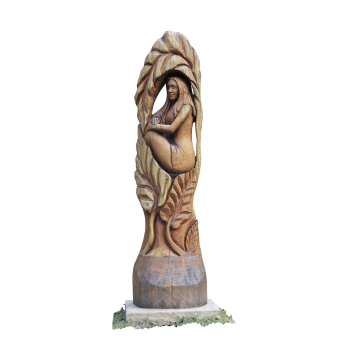
Wooden girl statue-Jiří Nekola
It is one of the wood carvings by Czech artist Jiří Nekola, which was exhibited in Frymburk in the exhibition "Wecutwoodforchildren2014. He mainly focuses on character creation, but also deals with animals and fairy tale themes. Not only create wood carvings, but also make ice sculptures and Christmas manger. His work can be seen in various exhibitions, including the Art Space Gallery in Prague 1 and the Šeberák restaurant in Prague Kunratice. Not only on display in public spaces, but also in private collections and even in films.

Blonde girl wood carving-Jan Švadlenka
It was created by Czech artist Jan vadlenka. Born in the Bulovka district of Prague, he is not only an active young footballer, but also a sculptor, poet and lyricist. He mainly devoted himself to the creation of large-scale sculptures. His work not only received attention in the Czech Republic, but also appeared in the films "PostCoitum" and "Bathory. His artistic creation covers characters, animals and fairy tale themes, and his wood carvings are recognized for their unique style and exquisite craftsmanship. The wood statue of the blonde girl is part of his many outstanding works.

Reclining Buddha Sakyamuni (wood carving)
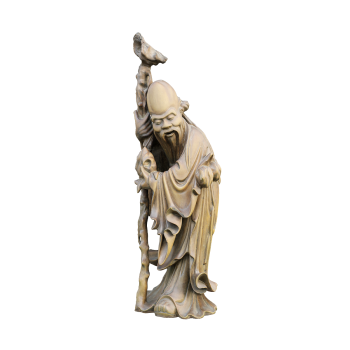
Japanese Old Man Wood Carving

Wood carving Asian elephant

Exquisite female wood carving

Balinese Women Wood Carvings

Woman and dragon exquisite wood carving

Guanyin Statue
Guanyin Bodhisattva is one of the four great bodhisattvas in Chinese Buddhism. According to legend, his birthday is on the 19th day of the second lunar month, the day of enlightenment is on the 19th day of the sixth lunar month, and the day of Nirvana is on the 19th day of the ninth lunar month. It is said that the Taoist temple is Mount Putuo. The belief in Guanyin has had a profound influence in China, leading to various folk legends about Guanyin Bodhisattva, such as the widely circulated belief that Guanyin is Princess Miaoshan, the third princess of King Miaozhuang of Xinglin Kingdom. This kind of female Guanyin legend can first be seen in Zhu Ben's "Qu Yu Jiuwen" during the Song Dynasty. Afterwards, Guan Daosheng's biography "Biography of Guanyin Bodhisattva" became a complete biography during the late Song and early Yuan dynasties.

Guanyin Statue
Guanyin Bodhisattva is one of the four great bodhisattvas in Chinese Buddhism. According to legend, his birthday is on the 19th day of the second lunar month, the day of enlightenment is on the 19th day of the sixth lunar month, and the day of Nirvana is on the 19th day of the ninth lunar month. It is said that the Taoist temple is Mount Putuo. The belief in Guanyin has had a profound influence in China, leading to various folk legends about Guanyin Bodhisattva, such as the widely circulated belief that Guanyin is Princess Miaoshan, the third princess of King Miaozhuang of Xinglin Kingdom. This kind of female Guanyin legend can first be seen in Zhu Ben's "Qu Yu Jiuwen" during the Song Dynasty. Afterwards, Guan Daosheng's biography "Biography of Guanyin Bodhisattva" became a complete biography during the late Song and early Yuan dynasties.
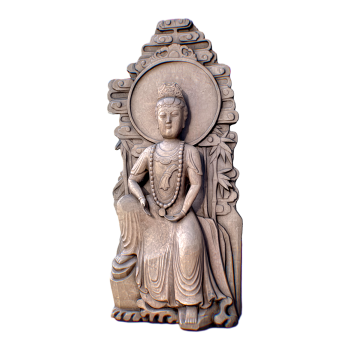
【 Wood Carving 】 Avalokitesvara Bodhisattva (3D printable)
Avalokitesvara Bodhisattva, also known as Avalokite ś vara in Sanskrit, is a transliteration of the Sanskrit word Avalokite ś vara. It is also translated as "Avalokitesvara" or "Avalokitesvara" and transliterated as "Avalokitesvara" or "Avalokitesvara". Amitabha Buddha's left attendant, one of the "Three Saints of the West". Buddhism believes that Avalokitesvara Bodhisattva is a compassionate and benevolent bodhisattva. When suffering beings recite his name, the Bodhisattva immediately observes his voice and goes to save and liberate them, hence the name. During the Tang Dynasty, due to the taboo of using the name of Emperor Taizong Li Shimin, the character "shi" was removed and he was briefly referred to as "Guanyin".

Shuiyue Guanyin
Shuiyue Guanyin, also known as Water Auspicious Guanyin or Water Auspicious Bodhisattva, is the corresponding incarnation of Guanyin's thirty-three phases of observing water with one heart. The name 'Shuiyue' is not derived from early Buddhist scriptures, but rather from the fusion of Buddhism with local culture after it was introduced to China. There are different theories about the origin of Shuiyue Guanyin, but it is currently unanimously believed to be related to the mid Tang painter Zhou Fang. According to Xuanzang's "Records of the Western Regions of the Great Tang Dynasty", Zhou Fang created the body of Guanzi Bodhisattva in the Bu'luojia Mountain, which is described as "a marvelous creation of water and moon". This painting depicts a full moon surrounding Guanyin, surrounded by a bamboo forest. Since the Tang Dynasty, the image of Shuiyue Guanyin has been constantly evolving, and its sitting posture has also undergone several changes.

Fortune, Fortune, Longevity, and Three Stars (Yellow Peach Woodcarving)
The Three Stars of Fortune, Fortune, and Longevity originated from people's natural worship of ancient stars. In the beginning of spring, in the south, there are three stars that are closely spaced and connected in a straight line. Chinese people call these three stars "Lu, Fu, and Shou", and regard them as three auspicious stars that respectively govern the blessings, longevity, and other aspects of the world, known as the "Three Stars of Fu, Lu, and Shou". As the saying goes, "Three stars shine high, and the New Year is coming!" When three stars hang high in the southern sky at night, it is the time of Chinese Spring Festival. This is a belief belonging to the Chinese people. They have a great influence in the Han people. The three immortals of happiness, wealth and longevity have become a true portrayal of the Han people's secular life ideal.

Philippine deity - Rice Protector
The Filipino deity, known as Bul ul (Rice Protector), crouches naked. His elbows are on his knees, and his hands are on his cheeks. It sits on a small pedestal with an irregular hemisphere shape. Black wood grain.

Elephant wood carving

Munich City 3D Map
Jakob Sandtner is a carpenter from Straubing, representing Duke Albrecht V of Bavaria to create famous city models in Bavaria, including Straubing, Munich, Landshut, Ingolstadt, and Burghausen. These carefully crafted map models are currently stored at the Bavarian State Museum in Munich.

The Virgin Mary
The Virgin Mary is depicted on a sphere embedded in intricately carved scrolls. The main body of the statue is made of lime wood, while the sphere and base are made of walnut wood. The size is 40.5 centimeters high and was created around 1750. This statue showcases the characteristics of 18th century European woodcarving art, in which basswood is often used to create intricate sculptures due to its ease of carving. Walnut wood was chosen to make the sphere and base of the statue due to its hard texture and beautiful texture, increasing the texture and durability of the work.

Saint Anne
Saint Anne sat on a pedestal shaped like a pedestal, wearing a red dress, a silver plated veil, and a gilded cloak. Saint Mary stood beside her. The mother supported her daughter's left shoulder with her right hand. This work is from the collection of Heiligenkreuz Abbey. The size is 51 centimeters high, dating back to the first half of the 18th century. Saint Anne is the grandmother of Jesus, also known as the mother of the Virgin Mary, and her image is often depicted in Christian art. This set of statues showcases the intimate relationship between Saint Anne and Saint Mary, as well as the traditional image of Saint Anne in religious art.

Bishop's bust
The bishop's bust at the Heiligenkreis Monastery Museum. Giovanni Giuliani's head made of basswood was initially placed on a choir stall in the university church. After renovation work, it entered the museum.

Curly Mouse
The Curly Mouse is an artwork from the second half of the 19th century, currently housed in the Minneapolis Museum of Art in the United States. This artwork is a redwood sculpture shaped like a curled mouse. This piece is the work of Japanese woodcarver Masao Suzuki (1815-1890), known for his intricate details and vivid expressiveness.

Longevity Star Woodcarving
Taoist longevity star wood carving. In Chinese, his name means' Star of Longevity '. The elderly figure leaned against a cane, holding a peach in his left hand and a crane beside him. In this situation, the crane would land on the cane.

Popular Models
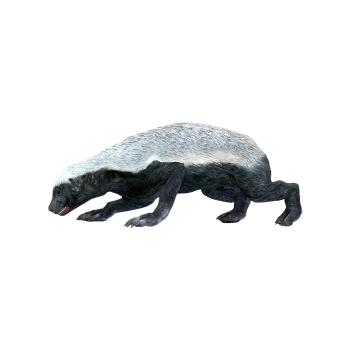
Honey Badger (3D animated model)
192 View
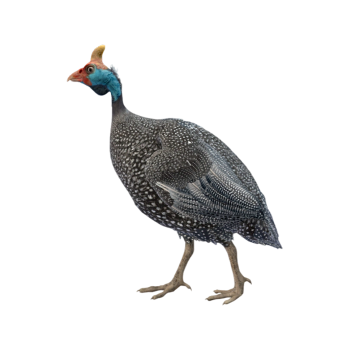
Guinea fowl (3D animated model)
163 View
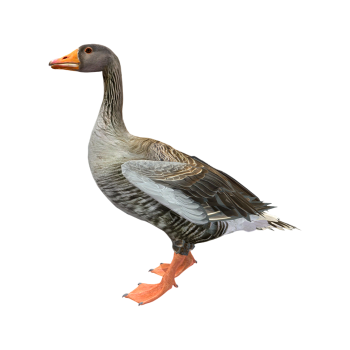
Wild Goose (3D animated model)
185 View
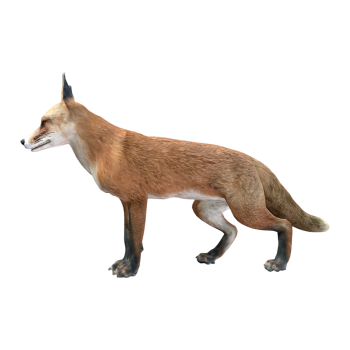
Red Fox (3D animated model)
153 View
Random Model


sawdust collector
876 View

Kakadu Parrot of Mason Porcelain
760 View

Cross shaped long curved knife
1123 View




3D animation model of indigo bunting
720 View


BMW M5 CS Luxury Sedan
894 View